Commercial water damage repair in Grand Rapids
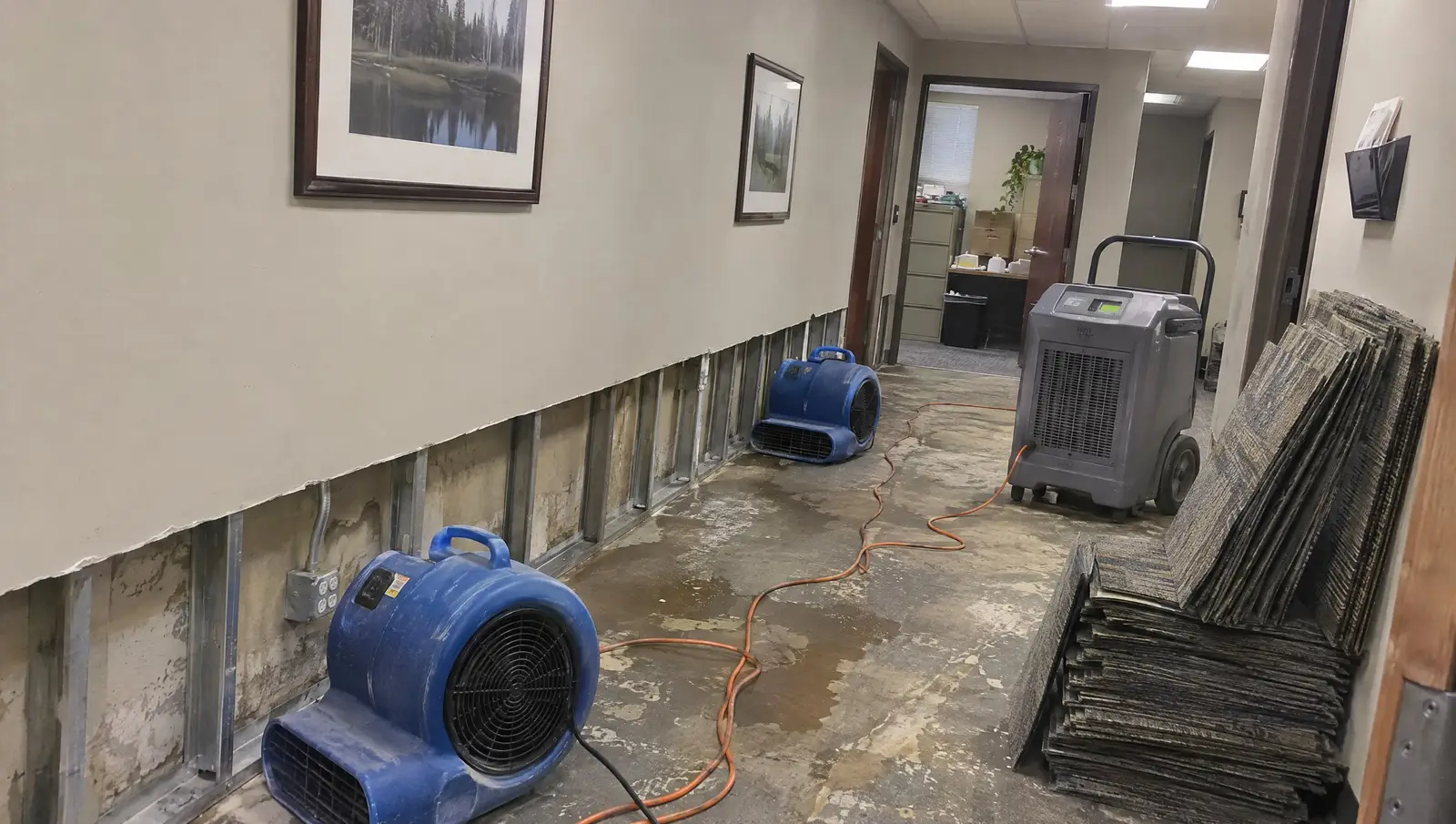
A failed supply line or a frozen pipe can soak ceilings, drywall, insulation and flooring across several rooms or floors before anyone finds it. Drying is a job for a water mitigation company. Grand Rapids Construction handles what comes around it: opening walls and ceilings to find where the water went, coordinating the plumbing repair, and rebuilding the space with records your insurer can follow.
- MI Builders License 262100253
- Commercial and industrial work only
- Work planned around operating facilities
- Kent, Barry and Muskegon counties
A pipe burst in our office building. Who do we call?
A plumber stops the leak and a water mitigation company extracts the water and dries the building; then a commercial general contractor opens up hidden damage and rebuilds the ceilings, walls and floors. Grand Rapids Construction handles that rebuild for commercial buildings in Grand Rapids and West Michigan, coordinates the plumbing repair and documents it for the claim. Once people are safe, call 616-323-0292.
Right now, in this order
If water is near electrical panels, outlets or equipment, or a ceiling is bulging, keep everyone out of the area. Call 911 if a ceiling is coming down or you see sparking.
Shut off the water at the nearest valve or the main if it is safe to reach. If the water is coming from sprinkler piping, call your fire protection monitoring company and follow your fire protection procedure instead.
Call a plumber to stop the leak and a water mitigation company to remove the water and start drying. Tell us if you need help finding one.
Take photos and video of the water, the source and everything wet before anything is moved or thrown away.
Call your insurance agent to open a claim, then call us at 616-323-0292 about the rebuild.
What we repair
- Opening walls and ceilings to find hidden water
- Removing wet drywall, insulation and ceiling tile
- Plumbing repairs through licensed plumbers
- New drywall, framing repairs and finishing
- Suspended ceilings and ceiling grid
- Carpet tile, LVT and other flooring
- Cabinets, millwork and restroom finishes
- Paint, trim and final cleaning before you move back in
Where our part stops. We do not extract water, run drying equipment or test for mold: a water mitigation company and qualified specialists do. Plumbing repairs are made by licensed plumbers under our coordination, and your insurer decides what the policy covers.
Three jobs, three different trades
A burst pipe needs a plumber, a mitigation company and a builder, in that order. A licensed plumber stops the leak and repairs the pipe; we coordinate that work when it sits inside a wall or ceiling we are opening. The mitigation company extracts standing water, sets up drying equipment and takes moisture readings until the materials are dry. We then rebuild.
The mitigation company's readings decide when a wall or floor is ready to close up, not the calendar. Putting new drywall over wet studs or laying flooring on a wet slab traps the moisture and brings the damage back.
Finding water you cannot see
Water runs down inside wall cavities, spreads along the slab under baseboard, follows pipes and conduit to the floor below, and soaks the insulation above a suspended ceiling. We pull baseboard, cut drywall at a straight line above the wet area as shown by the moisture readings, check the far side of each wall and look at the ceiling of the floor below.
If opening a wall shows visible mold or a strong musty smell, work stops in that area until a qualified specialist has assessed it.
Rebuilding while the building is in use
Offices, clinics and multi-tenant buildings usually keep running around the damaged rooms. We set up dust barriers, phase the rebuild room by room, and schedule noisy work for hours you choose. Ceiling tile, carpet tile and wall finishes are matched to what is there; when a product has been discontinued, we tell you before ordering so you can choose between the closest match and redoing the whole room.
What the claim file needs
Photos before anything is removed. A list of what was removed, with quantities. The mitigation company's moisture logs. The plumber's note on what failed. Keep damaged materials until your adjuster has seen them or agreed they can go, and keep the mitigation, plumbing and rebuild invoices separate. Policies can treat a sudden burst and a slow leak differently; your insurer decides what is covered.
What helps us help you
- Where the water came from and when it was found
- Which rooms and floors were affected
- The mitigation company's name and moisture records
- The plumber's report on the cause
- Photos taken before anything was removed
- Your claim number and adjuster contact
Part of our emergency repairs work.
Questions about commercial water damage repair
Can you start rebuilding right away?
Not until the materials are dry. Rebuilding over wet framing or a wet slab traps the moisture. The mitigation company's readings tell us when an area is ready to close up.
Do you do water extraction and drying?
No. That is done by a water mitigation company with the equipment for it. We work alongside them and take over once the space is dry.
How much drywall has to come out?
Enough to reach dry material and expose wet insulation and framing. The cut line follows the moisture readings, not just the visible stain.
Will our ceiling tiles and carpet match?
If the product is still made, usually. If it has been discontinued, we tell you before ordering so you can decide between the closest match and replacing the whole room.
Do wet ceiling tiles need replacing?
Tiles that sagged, stained or got soaked are normally replaced, and the wet insulation above them comes out too.
Should we throw away damaged materials?
Not before they are photographed and your insurer has seen them or agreed they can go. Ask your adjuster before anything is hauled away.
Other emergency repairs
Part of emergency repairs. All services.
- Sprinkler discharge damageA broken head or pipe: repairs below and the system back in service
- Emergency roof leak repairActive leaks over stock, equipment and offices on flat roofs
- Tenant improvementsBuildouts for new tenants, for landlords and tenants
- Emergency repairsVehicle impacts, roof leaks, water and storm damage
Damage to a commercial building?
For immediate danger call 911 first. For building damage, phone us; do not rely on a web form. Call 616-323-0292 or email info@grandrapidsconstruction.com.